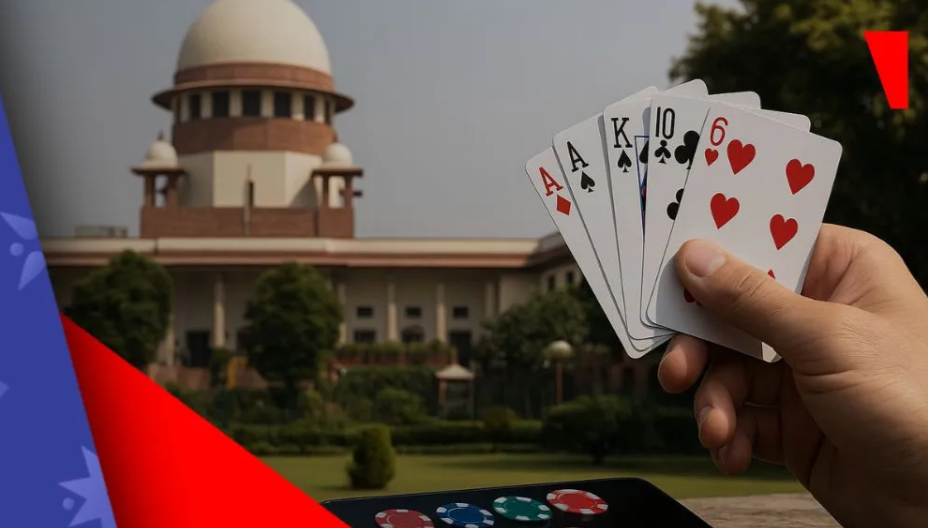
The Supreme Court will take up a crucial batch of petitions challenging the Promotion and Regulation of Online Gaming Act 2025 in January 2026 after real money gaming operators sought urgent relief from the new law.
A three judge bench led by Chief Justice Surya Kant agreed on 11 December to list the case next month following a plea from Head Digital Works, the operator of A23 Rummy. Senior advocates C Aryama Sundaram and Arvind Datar, appearing for the petitioners, said that businesses had come to a halt and that job losses were rising after the law received the President’s assent in August.
According to Moneycontrol, the petitioners told the court that the matter had gone off the board of the bench headed by Justices JB Pardiwala and KV Viswanathan. That bench had been hearing the current challenge together with earlier appeals related to state level bans on online games played for stakes.
The counsel highlighted that the Supreme Court has already reserved judgment in several connected cases. These include challenges to Goods and Services Tax (GST) notices worth an estimated Rs 2,500 billion ($25 billion) issued to online real money gaming firms and casino companies. The pending judgment is likely to influence the outcome of the petitions against the central law.
The Chief Justice told the parties that the petitions will be listed before a three judge bench in January and that bench composition will be finalised soon.
The Promotion and Regulation of Online Gaming Act was introduced in August 2025 to regulate online gaming platforms that offer contests involving real money. The Act prohibits any online game where a user deposits money with the expectation of earning winnings linked to that deposit.
Following the President’s assent, several real money gaming platforms, including A23, suspended contests involving deposits. The operators have now asked the court for a temporary stay on the enforcement of the new law. They have also requested that the court strike down key sections that prohibit online money games, arguing that these provisions exceed the legislative powers of the central government.
In its response, the central government defended the law. In a November affidavit, it said that rapid and unregulated growth in online money gaming apps had raised concerns over financial crime. The Centre said these platforms have been linked to fraud, money laundering, tax evasion and in some cases the financing of terrorism. It added that such activities pose risks to national security and public order.
According to the government, about 45 crore people have been negatively affected by online money games and face losses of more than Rs 20,000 crore every year. The affidavit said the law is needed to curb these harms and create a safer digital environment for users.
Although the law has received assent, its enforcement has not yet begun. The government issued draft rules for the sector in October and is working to finalise the regulatory framework.
#India #OnlineGaming #PROGA #SupremeCourt #Regulation #RealMoneyGaming #Compliance #GST #GamingIndustry

Welcome to Gambling Consulting Authority (GCA) - Your Strategic Partner in Gambling Industry Advancement