
With only days left in the legislative session, Alabama lawmakers remain split over the state’s gambling future. The debate centres on whether residents will vote on a comprehensive expansion—including casinos and sports betting—or a lottery-only plan.
In the Senate, Senator Merika Coleman has introduced a sweeping measure that would let voters decide on legalising a state lottery, in-person casino gaming, and sports wagering. Her proposal outlines a regulatory framework for casinos and sports betting but requires a constitutional amendment—placing the final decision in the hands of voters.
Meanwhile, in the House, Representative Philip Ensler has filed the “Clean Lottery Act,” a narrower bill focused solely on establishing a state lottery. Ensler argues that limiting the scope could help sidestep the political gridlock that has repeatedly derailed broader gambling packages.
Under Ensler’s proposal, lottery revenue would be divided into three parts. The first is direct rebate checks for Alabama residents, followed by additional funding for public education, and lastly, support for public health programmes.
So far, neither proposal has gained traction. Coleman’s bill remains stuck in a Senate committee, while Ensler’s lottery-only measure has yet to receive a hearing.
Alabama’s gambling debate is rooted in decades of failed attempts to establish a lottery. Article XII, Section 183 of the Alabama Constitution historically prohibited lotteries, creating a strong legal barrier. Any change requires a constitutional amendment, meaning voters must approve it at the ballot box—a higher hurdle than simple legislation.
Religious opposition has also been a consistent force, with churches and conservative groups framing lotteries as morally harmful. Lawmakers remain divided between pursuing a comprehensive expansion or a limited lottery-only plan, leading to repeated stalemates.
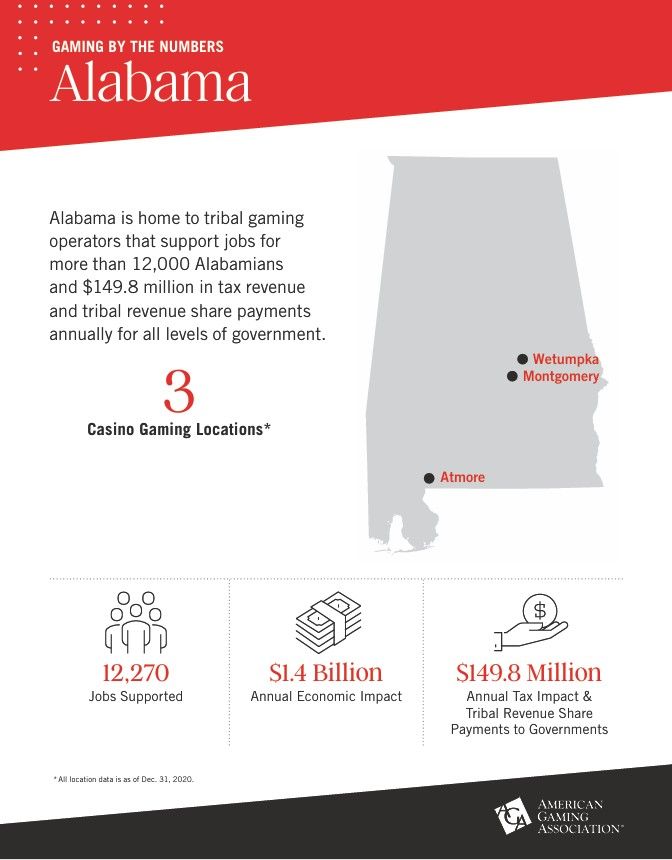
(Source: American Gaming Association)
Alabama is one of only five states—alongside Alaska, Hawaii, Nevada, and Utah—without a lottery. Contrastingly, neighbouring states like Georgia, Florida, and Tennessee operate lotteries that fund education and scholarships. Many Alabama residents cross state lines to buy tickets, underscoring the state’s missed opportunities.
A lottery alone could generate hundreds of millions annually, while Coleman’s broader bill—including casinos and sports betting—could bring in even more revenue. Georgia and Tennessee, for example, fund scholarships and education programmes through lottery revenues, according to several media outlets.
Global gambling revenue has surpassed $643 billion in 2025 and is projected to exceed $655 billion in2026. The United States, for one, remains the largest gambling market in the world, with strong growth in both physical casinos and online platforms, as mentioned by Gambling Insider.
Critics warn that gambling profits often concentrate in certain regions only, leaving rural communities behind and widening economic disparities. Expanded gambling also raises concerns about addiction, financial distress, family breakdown, and mental health issues.
Moreover, some studies link gambling expansion to higher crime rates, including fraud and theft, though regulation can mitigate risks. The Alabama Policy Institute cautions that legalising online gambling could effectively turn every smartphone into a casino, increasing accessibility and risks for younger populations.
#GamblingRegulation #USGambling #Lottery #SportsBetting #CasinoIndustry #GamingLaw #GamingPolicy #iGaming #USPolitics #GamingLegislation #GamblingDebate

Welcome to Gambling Consulting Authority (GCA) - Your Strategic Partner in Gambling Industry Advancement