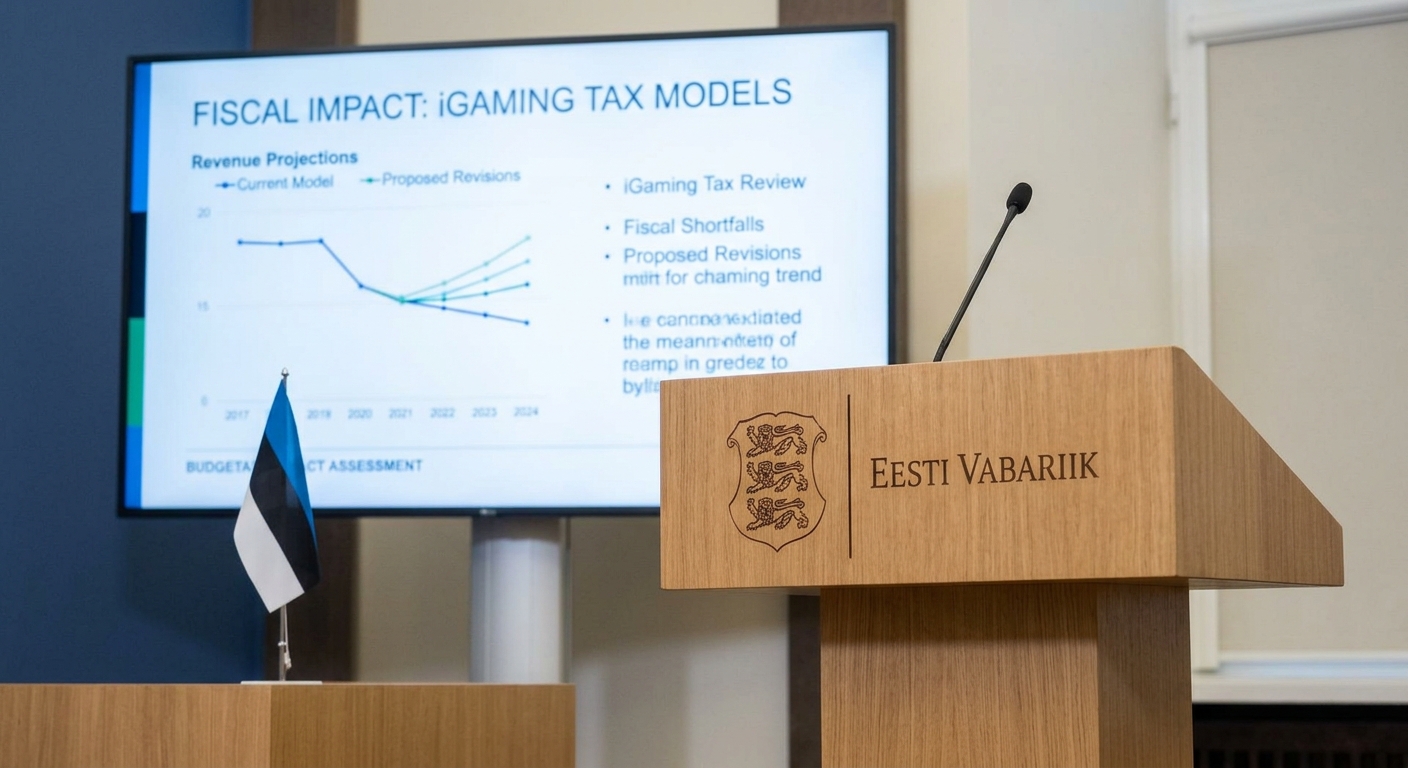
When Estonian lawmakers lowered the tax on licensed remote gambling platforms from 6% to 4% under the Reform-Eesti 200 budget framework, the goal was simple: turn the Baltic nation into a premier European tech hub for online gaming, taking inspiration from jurisdictions like Malta.
Eight months later, Prime Minister Kristen Michal is forcing a premature review of that decision.
The Baltic Experiment Hits a Wall
The tax cut was designed to run through 2028 before undergoing formal evaluation. Supporters, led by junior coalition partner Eesti 200, argued that lower duties would expand the long-term tax base by attracting foreign operators and generating sustainable funding for local sport and culture.
However, the strategy has yielded limited initial movement:
Market Response: The Finance Ministry confirmed in June that no new operators entered the country under the reduced rate, with only two applications under review.
Fiscal Shortfalls: Projections suggest the lower rate could reduce tax receipts by €6m in 2026, scaling up to €13m annually by 2029 if new operators fail to materialize.
Drafting Complications: An earlier drafting error in early 2026 briefly created a tax loop, forcing parliament to patch the law and ask operators for voluntary contributions to offset lost funds.
Broad Budget Pressures
Prime Minister Michal’s call for a review is tied to wider fiscal pressures facing the 2027 budget. While economic growth is projected at 2.5% for 2026, the general government deficit is set to hit 4.4% of GDP, exceeding standard EU targets.
At the same time, national defense spending has been elevated above 5% of GDP in response to regional security considerations. Balancing these commitments alongside domestic service needs leaves minimal margin for unproven tax incentives.
Political Dynamics and Next Steps
The proposal faces internal political hurdles. The governing coalition between the Reform Party and Eesti 200 currently holds 50 of the 101 seats in the Riigikogu, leaving the Prime Minister with little room for legislative friction.
While acknowledging that the lower tax rate has had limited time to prove its value, government leadership maintains that ongoing reductions must deliver tangible returns. If lower taxes fail to generate additional revenue, the administration plans to adjust its approach as broader 2027 budget negotiations continue.
#Estonia #GamingRegulation #iGamingTax #Compliance #GamblingIndustry #Taxation #EstoniaiGaming

Welcome to Gambling Consulting Authority (GCA) - Your Strategic Partner in Gambling Industry Advancement