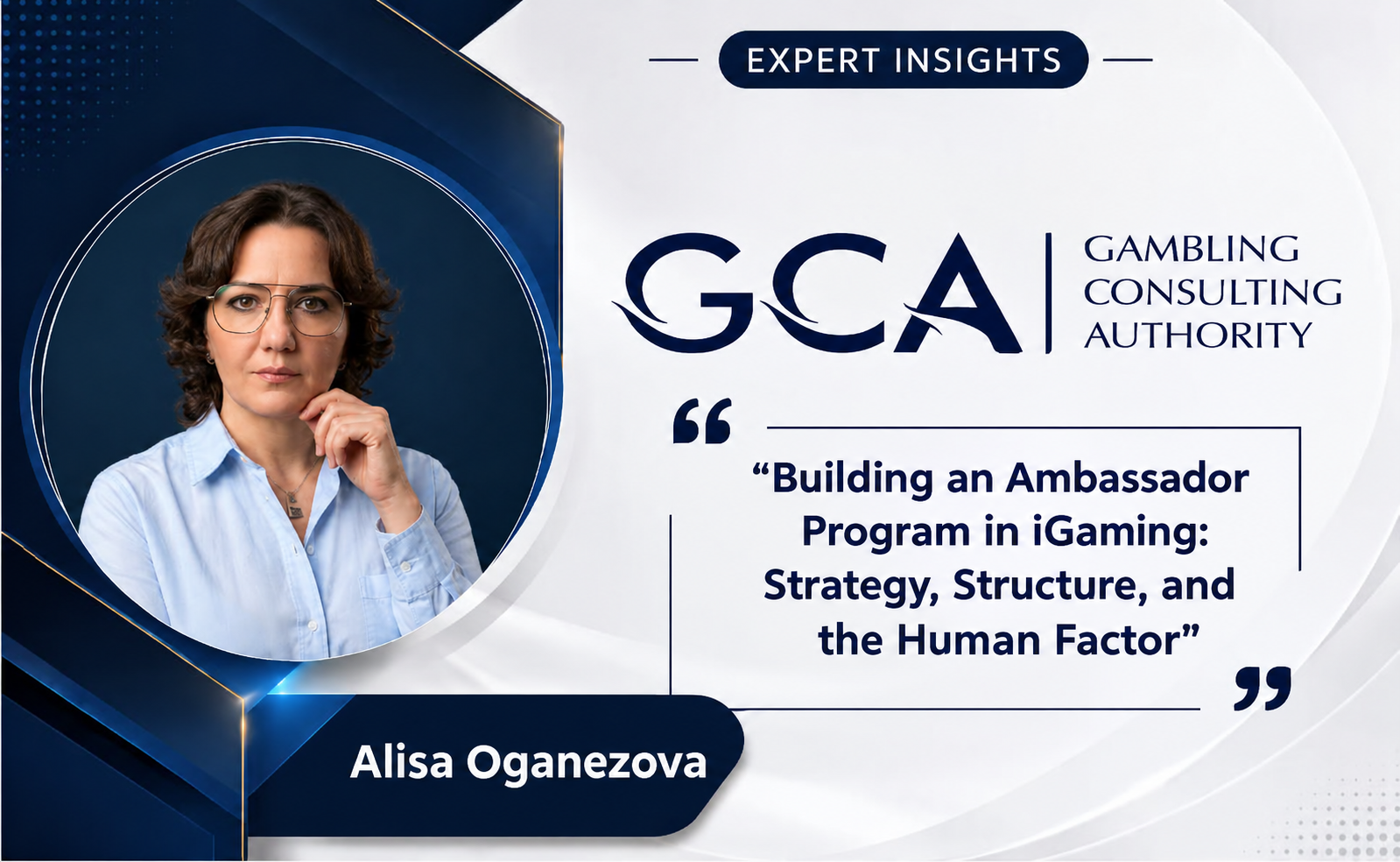
Marketing Strategic Consultant with 19 years of experience across iGaming, FMCG, and entertainment, with professional experience spanning five CEE markets. She has also built and managed ambassador and sports sponsorship programs, working with elite athletes and national sports teams.
Ambassador programs have become one of the most powerful growth tools in iGaming marketing. Done well, they build brand credibility, expand audience reach, and create emotional connections that no paid campaign can replicate. Done poorly, they drain budgets, generate reputational risk, and leave both brand and ambassador worse off.
Having built and managed ambassador programs from the ground up - working with elite athletes including UFC champions, Georgian National Basketball, Judo, and Parafencing teams - I've learned that the difference between the two outcomes rarely comes down to budget. It comes down to structure, clarity, and the quality of relationships you build before the contract is signed.
Why Ambassadors Matter in iGaming
iGaming operates in a uniquely competitive and regulated environment. Brands often look similar, product differentiation is difficult to communicate, and advertising restrictions in many markets limit what you can say and where you can say it. In this context, ambassadors do something media budgets cannot: they lend authenticity.
When an athlete or public figure chooses to associate with a brand - visibly, consistently, and with genuine engagement - it signals something to their audience. Not just awareness, but endorsement. And in iGaming, where trust is both scarce and essential, that endorsement carries disproportionate value.
The challenge is that this value is fragile. It depends entirely on the authenticity of the relationship and the integrity of the ambassador. Which is why the acquisition process is not where most programs fail - it's where they should begin with the most care.
Acquisition: Finding the Right Fit, Not the Biggest Name
The most common mistake in ambassador acquisition is chasing reach over relevance. A global sports star with tens of millions of followers sounds compelling in a pitch deck. In practice, if their audience doesn't overlap with your target market, or if their personal brand doesn't align with your values, if the flexibility they have do not come in line with your plans, the return will be negligible - and the risk will be significant.
The right questions before signing any ambassador are:
Who is their audience, really? Follower counts are vanity metrics. Engagement rates, audience demographics, market geography, cross of their followers with your users interest and behavior, tell the real story.
What does this person represent beyond their sport? Ambassadors carry their full public persona into every piece of content they produce. Their controversies become your controversies.
How much genuine interest do they have in your brand? Ambassadors who care about the partnership produce better content, show up more reliably, and become real advocates rather than paid placeholders.
Are they prepared to represent responsible gaming values? This is non-negotiable in iGaming. An ambassador who promotes reckless behavior, glorifies excessive risk, or appeals primarily to vulnerable audiences creates liability that no contract clause can fully protect against. The right ambassador understands a commitment to entertainment that is genuine, safe, and sustainable.
Onboarding: Setting the Relationship Up to Succeed
Once the right ambassador is identified and contracted, the onboarding process determines whether the program delivers. This is where most operators underinvest.
Ambassadors need to genuinely understand the brand they represent - its values, its audience, its tone, and its boundaries, its culture. This isn't achieved by sending a brand guidelines PDF. It requires real conversations, brand immersion, understanding the markets and the audience and a clear articulation of what success looks like for both parties.
Critically, the responsible gaming framework should be part of this onboarding. Ambassadors should know what the brand stands for in terms of player protection, understand the messaging they are and aren't expected to deliver, and feel genuinely aligned with the principle that iGaming, at its best, is about entertainment - not the way to gain income.
When ambassadors understand and believe this, it shows in their content. When they don't, it also shows.
Sponsorship in Georgia: Beyond Brand Visibility
In highly regulated markets like Georgia, an ambassador is not only a brand representative but can also function as an additional communication channel for the brand. The same principle becomes particularly relevant in sponsorship, where the relationship can extend beyond simple brand visibility and become an integrated platform for communication, content, and audience engagement.
This is especially important when working with sports teams. The sponsorship agreement should clearly define whether the brand is acquiring rights to use the team as a collective asset - for example, logo placement on jerseys, team-related content, access to training or game footage, and other team-level activations - or whether it also includes usage rights for individual players. If player rights are included, the brand should work closely not only with the team director, manager, or promoter, but also with each participating athlete. Players need to understand the brand's platforms, culture, communication principles, responsible gaming requirements, and any relevant restrictions. The brand should also identify the individual strengths of each athlete and build activations around them: one player may be particularly strong at public speaking, another at content creation, another at community engagement or event participation. This turns a sponsorship from a logo-placement exercise into a broader, more effective content and brand-building platform.
In Georgia, iGaming brands play a particularly visible role in supporting sport. This makes the industry an important driver of sports sponsorship and, more broadly, of the popularization and development of sport. It also creates an opportunity for iGaming brands to set a more mature sponsorship standard: investing not only in visibility, but in athletes, teams, content, and long-term audience engagement. As the practice develops, these partnerships can demonstrate to other industries how commercial investment can contribute to the visibility and growth of sport.
Performance Management: KPIs That Actually Measure What Matters
One of the most underbuilt components of ambassador programs is the performance framework. Without clear KPIs established from the outset, both parties operate on assumptions - which leads to disappointment, disputes, and early termination.
Effective ambassador KPIs in iGaming should measure across three dimensions:
Reach and engagement - content volume, platform reach, engagement rates, audience growth attributable to ambassador activity.
Brand impact - sentiment analysis, brand mention quality, share of voice in target markets, and perception shifts measurable through surveys or social listening.
Business outcomes - referral traffic, acquisition numbers where trackable, and retention impact when ambassadors are tied to specific campaigns or activations where allowed by local Law on Advertising.
These metrics should be reviewed regularly - monthly at minimum - with transparent reporting shared in both directions. The best ambassador relationships are genuine partnerships, where both sides understand what's working and why, and where the ambassador feels invested in the outcomes, not just the fee.
Relationship Management: The Human Factor
Numbers matter. But the long-term success of an ambassador program depends as much on the quality of the relationship as on the performance framework. Ambassadors who feel genuinely valued - who are consulted, included, and treated as partners rather than vendors - deliver more, stay longer, and become real advocates for the brand.
In practice, this means regular communication beyond contractual check-ins. It means involving ambassadors in relevant brand decisions where appropriate. It means celebrating their wins publicly and supporting them when they face challenges. It means acknowledging their achievements and propose extra bonuses for them. It means understanding that you are not just managing a contract - you are managing a human being's professional reputation and, to some extent, their personal brand.
Termination: Ending Well Matters as Much as Starting Well
No program guide would be complete without addressing termination. Contracts end - for performance reasons, strategic shifts, changes in regulations or simply because the partnership has run its course. How this is handled has lasting consequences for the brand's reputation among other potential ambassadors and within the industry.
Terminations should be professional, respectful, and clearly contractually governed. Exit terms, content removal clauses, and public communication should all be agreed in advance. An ambassador who feels fairly treated at the end of a partnership is often willing to speak positively about the brand ever after. One who feels ambushed or disrespected rarely stays quiet about it.
Conclusion
An iGaming ambassador program is not a marketing tactic. It is a strategic asset - one that requires as much thoroughness, investment, and care as any product development or media strategy. The brands that treat it as such consistently outperform those that don't.
The formula is straightforward, even if the execution isn't: find the right people, build real relationships, set clear expectations, measure honestly, and always represent the industry with the integrity it needs to grow.
The Georgian market also has a specific sponsorship dynamic worth recognizing: iGaming brands are among the most active commercial supporters of sport. As a result, the industry can act as a driver and an example for other sectors to invest in sports ambassadors, teams or infrastructure and to contribute to the wider popularization and development of sport. This makes sponsorship not only a brand-building tool, but also part of the broader sports ecosystem.
#iGaming #Marketing #AmbassadorMarketing #SportsSponsorship #ResponsibleGaming #Georgia #GCA

Welcome to Gambling Consulting Authority (GCA) - Your Strategic Partner in Gambling Industry Advancement